Need Immediate Electrical Assistance in Independence?
Our experienced technicians are dispatched across Independence and surrounding Jackson County neighborhoods. Speak directly with our local dispatch desk for prompt troubleshooting coordination, safety inspections, and clear project estimates.
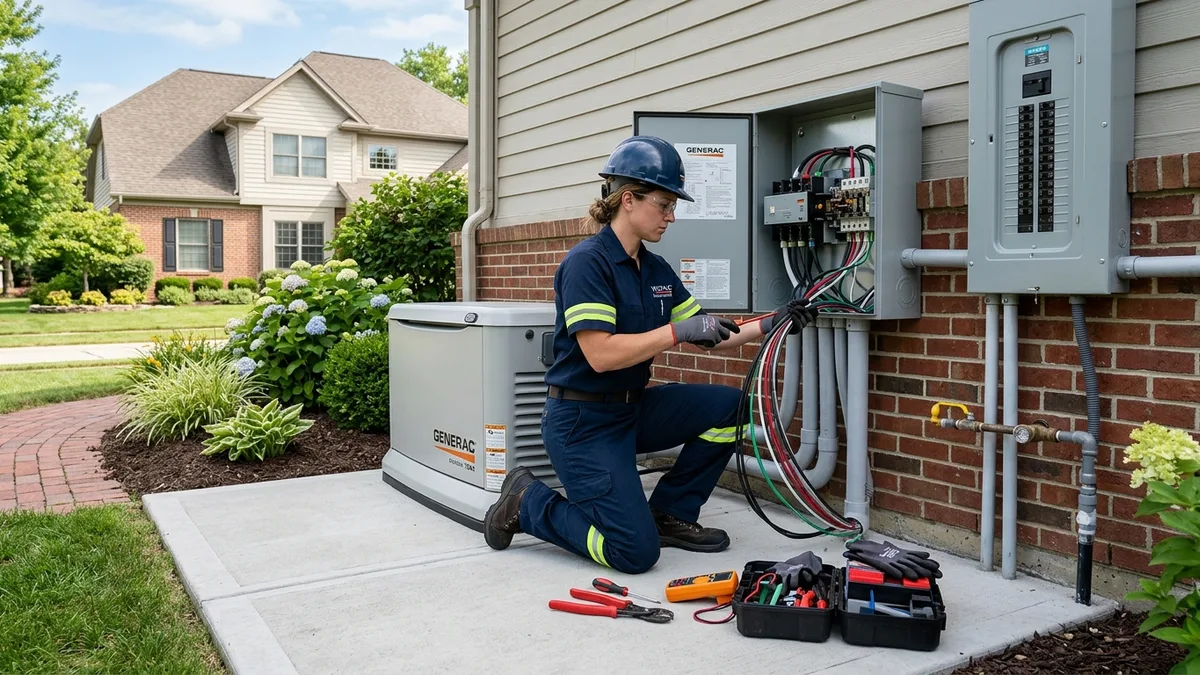
Turnkey Whole-Home Standby Generator Engineering in Independence, Missouri
Jackson County weather is notoriously volatile, subjecting residents and commercial property owners to extreme climate swings across all four seasons. During humid summer months, severe thunderstorms and tornado warnings spawn high-wind microbursts that snap mature oak branches across overhead distribution lines. In the winter, freezing rain and heavy ice storms coat power lines with hundreds of pounds of ice, triggering widespread, multi-day electrical blackouts. When municipal grid power collapses, relying on flashlights, candles, or hazardous portable extension cords leaves your home vulnerable to freezing pipes, flooded basements from stalled sump pumps, spoiled food, and loss of life-sustaining medical equipment.
At Electrician Independence, our specialized electrical services network delivers turnkey whole-home standby generator installations designed to keep your property fully powered through the worst Midwest weather emergencies. Unlike portable gasoline generators that require manual outdoor setup in freezing rain and present severe carbon monoxide risks, an automatic standby generator is permanently installed outside your home on a solid concrete pad, connected directly to your natural gas line or liquid propane supply, and wired directly into your electrical distribution panel via an Automatic Transfer Switch (ATS).
Every generator installation coordinated through our network complies with National Electrical Code (NEC) Article 702, City of Independence municipal building codes, and strict utility interconnection standards enforced by Independence Power and Light (IPL). Explore our transparent generator installation cost overview to understand system sizing, transfer switch configurations, and permitting parameters.
Technical Comparison: Standby Generator vs. Portable Generator
Understanding the critical operational and safety distinctions between permanent standby systems and portable units helps homeowners make informed backup power investments:
| System Feature / Metric | Whole-Home Standby Generator | Portable Gasoline / Dual-Fuel Generator |
|---|---|---|
| Startup Activation | 100% Automatic (within 10-15 seconds) | Manual (Pull-cord or push-button start in bad weather) |
| Fuel Source | Continuous Natural Gas or Large LP Tank | Stored gasoline cans (Subject to spoilage and ethanol gum) |
| Refueling Requirement | None (Continuous pipeline fuel supply) | Manual refueling every 4 to 8 hours during active storm |
| Transfer Switch Mechanism | Code-Compliant Automatic Transfer Switch (ATS) | Manual interlock or hazardous extension cords |
| Utility Backfeed Defense | Mechanically interlocked (100% utility safe) | High backfeed risk if connected improperly |
| Whole-House Coverage | Full HVAC, water heater, kitchen, sump pump | Limited to 3 to 5 small plug-in appliances |
| Sound Level | 62 to 67 dB(A) (Whisper-quiet enclosed sound attenuation) | 74 to 82+ dB(A) (Loud open-frame commercial engine) |
| Self-Testing Capability | Weekly automated 5-minute diagnostic exercise | Requires manual setup and test runs |
| Property Resale Value | Substantial permanent home equity addition | None (Leaves with the homeowner) |
How an Automatic Standby Generator Operates (The Automated Power Cycle)
An automatic standby generator functions as an intelligent, independent power station for your property. Here is the exact sequence of events that occurs when a storm severs utility power in Independence:
1. Continuous Utility Grid Monitoring
The Automatic Transfer Switch (ATS) is installed between your main electric meter and your home’s breaker panel. Control circuitry inside the ATS continuously monitors the incoming voltage from Independence Power and Light (IPL).
2. Outage Detection and Engine Ignition
When municipal grid power drops below acceptable operating voltage (typically 80% of nominal 240V potential) for more than three to five seconds, the transfer switch senses the utility blackout. It signals the generator’s engine control module to engage the heavy-duty electric starter, firing up the commercial engine on natural gas or propane.
3. Voltage Stabilization and Grid Isolation
Within ten seconds, the engine achieves its synchronous operating speed (3,600 RPM for standard 60 Hz electrical current), and the onboard digital alternator stabilizes voltage and frequency. Mechanically interlocked contactors inside the ATS physically disconnect your home from the utility grid, ensuring that generator power can never backfeed into external utility lines.
4. Emergency Power Transfer
Once grid isolation is verified, the ATS switches household electrical circuits over to generator power. Your lights illuminate, your central furnace or heat pump restarts, refrigerators resume cooling, and your sump pump protects your basement—all without you lifting a finger.
5. Utility Restoration and Controlled Cooldown
When Independence Power and Light line crews restore municipal electricity, the ATS senses steady utility voltage for a preset duration (typically five minutes) to confirm grid stability. The transfer switch seamlessly reconnects your home to utility power and runs the generator engine through a controlled cool-down cycle before shutting down and returning to standby readiness.
Sizing Your Generator: Essential Circuits vs. Whole-House Managed Power
Selecting the proper generator kilowatt (kW) capacity is critical to ensure your system can satisfy heavy inductive motor-starting surges (such as central air conditioning compressors and well pumps) without stalling:
1. Essential-Circuit Coverage (14 kW to 18 kW Systems)
Designed for budget-conscious homeowners who wish to maintain critical safety and comfort systems during an outage. An essential-circuit transfer switch powers:
- Primary central heating furnace blower and thermostat control.
- Sump pump and basement drainage systems.
- Main kitchen refrigerator and chest freezer.
- Master bedroom lighting, bathroom receptacles, and home internet router.
- Dedicated microwave and small kitchen appliance branch circuits.
2. Whole-House Managed Coverage (20 kW to 26 kW Systems)
For complete peace of mind, whole-house systems power your entire electrical panel simultaneously. Utilizing intelligent Smart Management Modules (SMM) or digital load-shedding technology, these systems monitor overall electrical demand. If the central air conditioner, electric clothes dryer, and water heater attempt to start at the exact same moment, the system temporarily delays secondary appliances for a few minutes until the primary compressor achieves operating speed, allowing a compact 22 kW or 26 kW generator to power large 3,000+ square foot homes seamlessly.
If your existing service entrance is an older 100-amp panel, pairing a generator installation with an electrical panel upgrade in Independence MO ensures complete compatibility with modern 200A service-rated transfer switches.
National Electrical Code (NEC Article 702) and IPL Utility Safety Rules
Installing an automatic standby generator involves severe life-safety considerations and strict code adherence:
Strict Prevention of Dangerous Utility Backfeeding
When utility power fails, Independence Power and Light line workers work in hazardous conditions, handling downed conductors and repairing transformers. If a generator is connected to household wiring without a code-compliant transfer switch, it will backfeed high-voltage electricity through the utility transformer, stepping 240V current back up to 7,200 volts on utility poles. This creates lethal electrocution risks for utility crews. Our installations utilize UL-listed, mechanically interlocked transfer switches that make backfeeding physically impossible.
Concrete Equipment Pad and Clearance Mandates
Standby generators produce exhaust gases containing carbon monoxide. Under National Fire Protection Association (NFPA) 37 and local City of Independence building ordinances:
- The generator must be installed on a level, pre-formed concrete pad or poured concrete foundation positioned at least five feet away from operable home windows, doors, and exterior wall vents.
- A minimum clearance of three feet must be maintained around the unit for ventilation and technician maintenance access.
- The unit must be positioned at least 18 inches away from combustible building walls (or comply with manufacturer fire-tested wall clearance specifications).
Natural Gas and LP Fuel Line Coordination
A high-capacity standby generator requires substantial fuel volume. A typical 22 kW generator consumes approximately 250 to 300 cubic feet of natural gas per hour under full electrical load. Our network coordinates with qualified mechanical gas plumbers to verify that your gas meter, supply regulators, and piping diameters can deliver adequate fuel pressure (5 to 7 inches of water column) during freezing winter temperatures when local heating demand peaks.
The Four-Phase Generator Installation Workflow
Our turnkey installation process handles every technical and municipal requirement from initial site assessment to final commissioning:
- On-Site Load Calculation and Sizing: Our lead technician evaluates your electrical panel, calculates continuous and surge wattage demands, inspects your gas meter capacity, and determines the ideal outdoor equipment pad location. You receive an itemized written estimate outlining equipment, electrical labor, gas piping, and municipal permit fees.
- Municipal Permitting and Plan Approval: We pull required electrical and mechanical trade permits through the City of Independence Building Inspection Division (111 E Maple Ave, phone: 816-325-7405), ensuring compliance with local zoning and noise ordinances.
- Pad Placement, Electrical, and Gas Hookup: Technicians place the heavy-duty concrete pad, mount the generator, install the Automatic Transfer Switch adjacent to your main panel, route heavy copper conductors inside protective conduit, and coordinate gas plumbing hookups.
- Commissioning, Utility Coordination, and Demonstration: Technicians perform simulated utility power outage tests, calibrate voltage and frequency outputs, torques all mechanical lugs to NEC 110.14(D) standards, coordinate the city trade inspection sign-off, and walk you through operating procedures and mobile Wi-Fi monitoring.
Review our transparent generator installation cost guide for budgeting parameters, equipment options, and maintenance recommendations.
Protect Your Backup Power System With Whole-Home Surge Protection
Lightning strikes often precede the utility power outages that cause generators to engage. Pairing your generator installation with panel-mounted whole-home surge protection ensures that the generator’s internal electronic control modules, automatic transfer switch microprocessors, and your household smart appliances remain defended against utility switching spikes and atmospheric lightning transients.
Schedule Your Standby Generator Consultation in Independence Today
Do not wait until the next severe ice storm or summer microburst leaves your home dark, freezing, or flooded. Invest in automated backup power security with Electrician Independence.
Contact our local dispatch desk today at (816) 586-5537 to schedule an on-site generator consultation, or submit an inquiry through our secure online contact form. Our team will evaluate your property’s electrical and fuel infrastructure, explain your options, and provide a clear written estimate for your review.
Transparent Pricing and Diagnostic Disclosure
Project costs, diagnostic fees, and installation rates displayed or discussed are regional market estimates for Independence, MO and surrounding Jackson County jurisdictions. Actual pricing varies based on exact on-site conditions, code compliance requirements, electrical panel capacity, materials needed, and municipal permit parameters enforced by the City of Independence Building Inspection Division or Independence Power and Light (IPL).
Estimates are for budgeting purposes only. Actual prices vary based on on-site conditions. Every service inquiry receives an on-site physical evaluation and a clear written estimate before any physical work begins.