Need Immediate Electrical Assistance in Independence?
Our experienced technicians are dispatched across Independence and surrounding Jackson County neighborhoods. Speak directly with our local dispatch desk for prompt troubleshooting coordination, safety inspections, and clear project estimates.
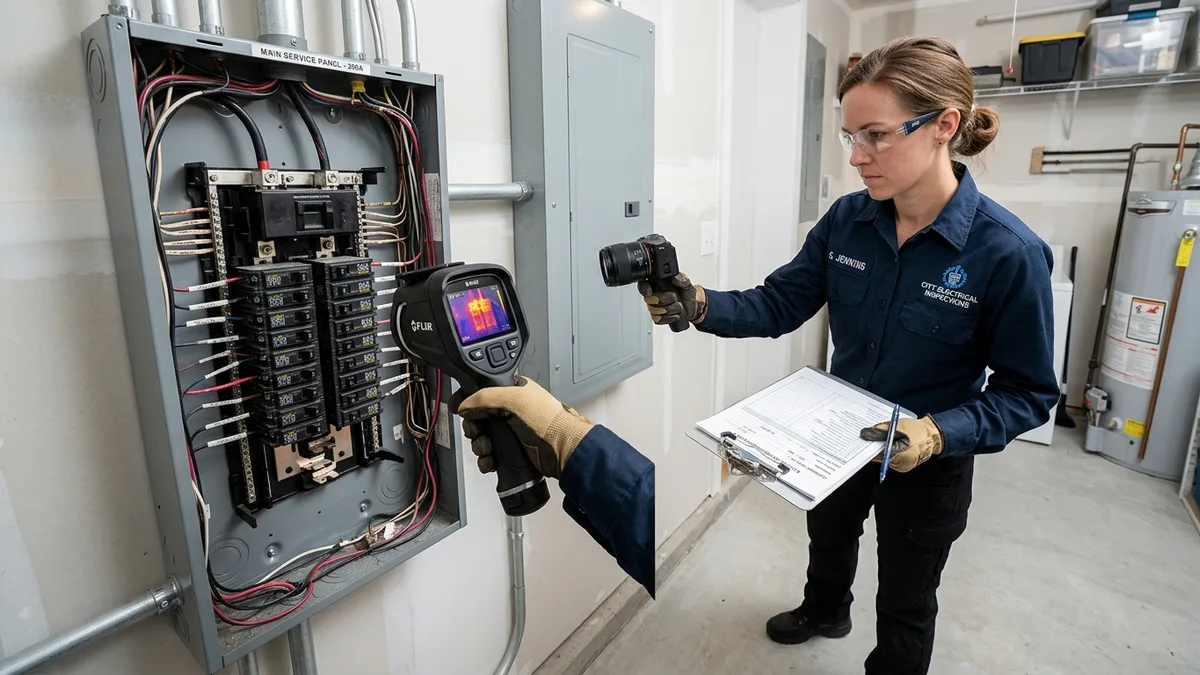
Rigorous Electrical Safety Inspections Across Independence, Missouri
Electricity is an invisible force that powers modern convenience, yet deteriorated conductors, improperly bonded circuits, overloaded distribution panels, and obsolete wiring methods represent the leading causes of residential structural fires across Jackson County. In Independence, Missouri, a substantial portion of the housing stock was constructed prior to the establishment of modern National Electrical Code (NEC) standards. Properties situated throughout historic neighborhoods like the Truman Heritage District or established mid-century subdivisions frequently conceal hazardous electrical conditions behind finished walls, inside attic insulation, and within aging service panels.
At Electrician Independence, our specialized electrical services network provides thorough, multi-point electrical safety inspections designed to uncover latent electrical dangers, verify compliance with local municipal codes, and protect your investment. Whether you are buying a prospective home, renewing homeowner insurance coverage, renovating an older residence, or experiencing unexplainable electrical anomalies, our experienced technicians evaluate every component of your electrical distribution system.
Every electrical safety audit examines your service drop, utility meter base, grounding electrode system, main breaker panel, branch circuits, switches, outlets, and life safety devices. We do not provide superficial visual walk-throughs. Our technicians utilize precision diagnostic equipment—including true-RMS digital multimeters, circuit analyzers, and non-contact infrared thermal imaging cameras—to identify thermal hotspots, voltage drops, high-resistance connections, and missing ground paths that standard home inspectors routinely miss.
When Should You Schedule an Electrical Safety Inspection?
Many property owners only consider their electrical infrastructure when a light switch fails or a circuit breaker trips repeatedly. However, proactive diagnostic assessments identify deteriorating equipment years before catastrophic failures manifest. We recommend scheduling an electrical safety audit under the following circumstances:
1. Purchasing an Older Independence Property
Standard general real estate home inspections cover dozens of property systems in a brief two-hour period. As a result, home inspectors rarely open distribution panels, test branch circuit impedance, or evaluate grounding electrode resistance. If you are entering escrow on a home constructed prior to 1985 in Independence, an independent electrical inspection is vital to identify ungrounded circuits, hazardous aluminum wiring, or obsolete Federal Pacific Electric (FPE) and Zinsco panels that could require thousands of dollars in unexpected repairs. Learn more in our comprehensive guide to electrician service costs.
2. Properties Constructed Over 40 Years Ago
Electrical insulation degrades with age, heat cycling, and exposure to environmental moisture. If your home has surpassed four decades without a comprehensive electrical modernization, your wiring infrastructure may feature degraded cloth-sheathed Romex, active knob and tube conductors, or undersized 60 amp or 100 amp electrical panels. Discover why upgrading your service is critical in our guide to electrical panel upgrades.
3. Adding High-Amperage Modern Appliances
Installing modern electrical equipment places heavy continuous electrical loads on your distribution system. Before adding a level 2 EV charger installation, a whole-home standby generator installation, a central heat pump system, or a finished basement suite, a certified load calculation and safety inspection ensures your service panel and meter base can safely accommodate the increased continuous amperage demand without thermal overloading.
4. Following Severe Jackson County Storms or Lightning Strikes
The Kansas City metropolitan area experiences severe convective thunderstorms, high winds, and intense lightning strikes during spring and summer months. Direct lightning strikes or high-voltage utility surges can vaporize surge suppression equipment, arc across junction boxes, weld breaker contacts, and compromise wire insulation inside attic spaces. If your home recently experienced a nearby lightning strike, an inspection combined with whole home surge protection prevents secondary fire hazards.
5. Persistent Warning Signs and Electrical Anomalies
If you experience unexplained breaker trips, warm wall plates, sizzling sounds, or flickering fixtures, your system is signaling active electrical distress. Explore our problem guides on why your circuit breaker keeps tripping and buzzing electrical panels to understand what these symptoms mean.
Our Comprehensive 50-Point Electrical Safety Inspection Protocol
Our electrical safety evaluation follows a systematic checklist aligned with current National Electrical Code requirements and local City of Independence municipal amendments. Our technicians methodically inspect and test five primary zones of your electrical infrastructure:
======================================================================
               5-ZONE ELECTRICAL SAFETY AUDIT BREAKDOWN
======================================================================
Zone 1: Service Entrance, Meter Base, and Grounding Electrode System
Zone 2: Main Distribution Panel, Subpanels, and Overcurrent Devices
Zone 3: Branch Circuit Wiring, Junctions, and Thermal Imaging
Zone 4: Receptacles, Switches, GFCI, and AFCI Protection
Zone 5: Dedicated Equipment, Life Safety Detectors, and Surges
======================================================================
Zone 1: Service Entrance, Weatherhead, and Grounding Infrastructure
The inspection begins outside your home where utility power enters from Independence Power and Light (IPL):
- Overhead Service Drop or Underground Lateral: We inspect utility cable clearance above driveways, walkways, and rooflines, verifying that overhead triplex cables maintain required code clearances and show no mechanical fraying or tree branch abrasion.
- Service Weatherhead and Mast: We ensure the weatherhead cap prevents rain infiltration and that the service mast is securely anchored to structural framing.
- Meter Socket Enclosure: We check the exterior meter housing for physical corrosion, missing knockouts, water entry, and verify that meter seal locks comply with IPL utility standards.
- Grounding Electrode Conductor (GEC): We inspect the copper grounding electrode conductor connecting your panel to dual exterior copper-clad ground rods spaced at least six feet apart, ensuring continuous mechanical bonding with heavy-duty ground clamps.
- Interior Water Line Bonding: We confirm that cold water interior metal piping is properly bonded to the electrical service within five feet of pipe entry, ensuring electrical faults cannot energize household plumbing.
Zone 2: Main Electrical Panel and Overcurrent Protection
Our technicians remove the deadfront panel cover to inspect internal components under live operating conditions:
- Enclosure and Bus Bar Health: We inspect for signs of moisture intrusion, rust, mechanical distortion, and metal filings. We verify that hot bus bars show no pitting, discoloration, or burning caused by loose breaker clip stabs.
- Main Breaker and Branch Breaker Sizing: We verify that every circuit breaker matches the current-carrying capacity of the attached branch conductors (for example, 15 amp breakers for 14 AWG copper wire; 20 amp breakers for 12 AWG copper wire). We inspect for dangerous “over-fusing” where oversized breakers allow wires to overheat before tripping. Learn about repairs in our circuit breaker repair service.
- Neutral and Equipment Ground Bus Bars: We confirm that neutral and equipment ground conductors are properly isolated in subpanels and bonded exclusively at the primary service disconnect.
- Conductor Torquing and Termination: We verify that terminal lugs and breaker screws conform to manufacturer torque specifications per NEC 110.14(D), eliminating high-resistance connections that generate localized heat.
- Infrared Thermal Thermography: Using thermal imaging cameras, we scan every breaker terminal, main lug, and bus bar connection to identify invisible hotspots that precede electrical fires.
Zone 3: Branch Circuit Wiring and Structural Hazards
We examine wiring pathways throughout accessible attic spaces, basements, crawlspaces, and exposed mechanical areas:
- Conductor Type Identification: We determine whether your property contains modern non-metallic sheathed cable (NM-B Romex), legacy rubber-and-cloth braided cable, ungrounded two-wire Romex, metallic armored cable (BX), or active knob and tube wiring. Read our comprehensive guide on house rewiring services for replacement options.
- Aluminum Wiring Assessment: For homes built between 1965 and 1973 containing single-strand aluminum branch circuit wiring, we inspect terminal connections for thermal expansion oxidation and verify whether approved copalum or AlumiConn remediation connectors have been installed.
- Junction Box Integrity: We verify that all wire splices are contained within covered metal or non-metallic junction boxes, and that no open wire splices or exposed wire nuts exist inside attics or crawlspaces.
- Cable Support and Physical Protection: We check that conductors are properly secured with insulated staples within 12 inches of boxes and every 4.5 feet along framing members, protected by nail strike plates where penetrating wall studs.
Zone 4: Receptacles, Switches, and Personnel Protection Devices
We test individual wall outlets, switches, and safety devices throughout interior living spaces:
- Ground-Fault Circuit-Interrupter (GFCI) Testing: We test all GFCI outlets and circuit breakers in wet or damp locations—including kitchens, bathrooms, unfinished basements, garages, laundry rooms, and exterior locations—using specialized instruments that simulate actual 4 to 6 milliamp ground faults to ensure rapid trip response times under 25 milliseconds.
- Arc-Fault Circuit-Interrupter (AFCI) Verification: We evaluate modern AFCI breakers protecting bedroom, living room, and common area circuits to confirm they detect dangerous series and parallel arcing events before ignition occurs.
- Tamper-Resistant Receptacles (TRR): In homes with children, we verify that wall outlets feature internal safety shutters compliant with NEC 406.12 to prevent accidental foreign object insertion.
- Polarity and Ground Continuity: Every accessible outlet is tested with a digital circuit analyzer to confirm correct line-neutral polarity, verify equipment grounding continuity, and detect false or bootleg ground jumpers. Learn about replacement solutions in our outlet installation and repair service.
Zone 5: Dedicated Equipment and Life Safety Systems
- Smoke and Carbon Monoxide Detectors: We verify that interconnected smoke detectors are installed inside every sleeping room, immediately outside bedroom clusters, and on every habitable story of the home. We test battery backup readiness and verify device manufacturing dates (detectors must be replaced every 10 years).
- Major Appliance Circuits: We inspect dedicated branch circuits feeding electric ranges, clothes dryers, dishwashers, water heaters, and HVAC equipment, verifying proper wire gauge, disconnect accessibility, and 4-wire grounding configurations.
- Whole-Home Surge Suppression: We verify whether your electrical service entrance includes Type 1 or Type 2 surge protective devices compliant with NEC 230.67 to protect delicate smart appliances and electronics from high-voltage transient spikes.
Comparison: Professional Electrical Safety Audit vs. Standard Home Inspection
Home buyers and property managers frequently assume that a standard residential home inspection includes a complete electrical audit. In practice, the scope of work between these two evaluations is substantially different:
| Feature / Inspection Component | Standard General Home Inspection | Professional Electrical Safety Audit |
|---|---|---|
| Primary Inspector Expertise | Generalist covering roofing, plumbing, HVAC, foundation | Experienced electrical specialist focused solely on power systems |
| Panel Deadfront Removal | Often skipped if restricted, painted, or rusted | Mandatory removal with full internal inspection of all components |
| Infrared Thermal Imaging | Rarely included or charged as an expensive add-on | Standard live-load thermographic scan of bus bars and breaker stabs |
| Ground Resistance Testing | Visual check of exterior rod only | Measured ground continuity and electrode bonding verification |
| GFCI / AFCI Response Testing | Simple plug-in tester push button only | Calibrated millisecond and milliamp threshold instrument testing |
| Conductor Insulation Testing | Not performed | Visual and diagnostic degradation checks across attics and basements |
| Load Calculation Audit | Not calculated | Full calculated load analysis against panel bus rating |
| Code Compliance Evaluation | General safety notes; no code citation | Detailed review against NEC standards and City of Independence code |
| Written Remediation Estimate | None provided; recommends “consult an electrician” | Clear written estimate detailing prioritized repairs and upgrade costs |
What You Receive: The Comprehensive Electrical Safety Report
Following the on-site physical evaluation, our technicians compile an exhaustive, easy-to-understand written Electrical Safety Report. This document serves as an actionable roadmap for prioritizing repairs, negotiating home purchase credits, or submitting required documentation to your insurance underwriter:
- Executive Safety Scorecard: A top-level summary rating the overall health, safety, and operational capacity of your electrical infrastructure.
- Immediate Life-Safety Hazards (Priority 1): Clear documentation of active hazards requiring urgent remediation—such as exposed energized conductors, missing GFCI protection in wet areas, melted insulation, or hazardous breaker panel brands.
- Recommended Upgrades and Code Non-Compliance (Priority 2): Practical improvements that modernize older installations to match current National Electrical Code safety standards, such as whole-home surge suppression or dedicated appliance circuits.
- Infrared Thermal Imagery: High-resolution digital photographs and thermal heat scans displaying any elevated temperature readings detected across electrical panels, breaker lugs, or major disconnects.
- Clear Written Remediation Estimate: Upfront pricing detailing the exact costs to correct documented hazards and bring your property into full compliance with City of Independence building regulations.
If immediate repairs or urgent wiring remediation are required, our technicians can coordinate repairs directly. Learn more about our full-service capabilities in our electrical repair and electrical troubleshooting service guides.
Local Electrical Regulations in Independence, MO
Conducting electrical inspections in Independence requires thorough knowledge of local jurisdiction requirements. The City of Independence Building Inspection Division, located at City Hall (111 E. Maple Ave, Independence, MO 64050; phone 816-325-7405), enforces the National Electrical Code with specific municipal amendments designed to protect local homeowners:
- Municipal Utility Coordination: Independence Power and Light (IPL) manages the city electrical grid independently from surrounding investor-owned utilities like Evergy. Any repairs involving the service weatherhead, meter socket, or main panel disconnect require coordination with IPL dispatch for service disconnection and reconnection.
- Rental Property Inspection Compliance: Landlords and property managers operating residential rental properties within Independence must comply with municipal rental licensing guidelines, which mandate working smoke detectors, covered electrical boxes, proper grounding, and functional GFCI protection in all wet rooms.
- Trade Permits for Corrective Work: Any structural modifications, service upgrades, or major branch circuit installations identified during our safety inspection must be permitted and inspected by city electrical inspectors prior to final sign-off.
Whether your property is located in central Independence, historic Englewood Arts District, or nearby communities like Blue Springs and Raytown, our inspection protocols adhere to the highest regional standards.
Frequently Asked Questions About Electrical Safety Inspections
How long does an electrical safety inspection take?
For an average single-family home (1,500 to 2,500 square feet) in Independence, a thorough electrical safety inspection requires between 1.5 and 2.5 hours. Larger properties, commercial facilities, or homes with multiple subpanels and extensive outbuildings may require up to 4 hours to complete full diagnostic testing.
Does an electrical safety inspection require shutting off power to the home?
Most of the inspection is conducted while the electrical system remains live under normal operating load so that our technicians can measure voltage, test circuit breakers, and perform infrared thermal imaging. A brief temporary power interruption (typically 10 to 15 minutes) is required when testing main disconnects and verifying main grounding electrode connections. Our technicians always notify you before cycling power.
Will an electrical safety inspection fail my home?
An electrical safety inspection is a diagnostic evaluation performed on your behalf; it is not a punitive municipal enforcement action. Our report documents hazards and code discrepancies for your private knowledge, home purchase negotiations, or insurance carrier requirements. We provide clear recommendations so that you can make informed decisions regarding property safety.
What is the difference between an inspection for home insurance versus a standard inspection?
Insurance underwriting inspections (often requested for homes older than 30 or 40 years) specifically target high-risk components that frequently trigger insurance claims: presence of knob and tube wiring, single-strand aluminum branch circuits, Federal Pacific Electric or Zinsco panels, and 60-amp service entrances. Our inspection covers all insurance carrier criteria while providing the deeper diagnostic evaluation of branch circuits and life-safety systems.
Can your technicians fix hazards identified during the inspection immediately?
In many cases, minor safety concerns—such as testing and replacing defective GFCI outlets, installing missing junction box covers, or labeling unidentifiable circuit breakers—can be performed during the same service appointment. For larger projects, such as a full 200 amp panel upgrade or complete house rewiring, our team provides an upfront written estimate and schedules the project with City of Independence trade permitting.
Schedule Your Electrical Safety Inspection Today
Don’t wait for a burning smell, repeated breaker trip, or electrical failure to uncover dangerous wiring hazards inside your home. Protect your property, your family, and your investment with an exhaustive 50-point electrical safety evaluation from Independence’s trusted local electrical team.
Contact our local dispatch desk today at (816) 586-5537 to schedule your comprehensive electrical safety inspection, or submit your property details through our online contact page for prompt service coordination.
Transparent Pricing and Diagnostic Disclosure
Project costs, diagnostic fees, and installation rates displayed or discussed are regional market estimates for Independence, MO and surrounding Jackson County jurisdictions. Actual pricing varies based on exact on-site conditions, code compliance requirements, electrical panel capacity, materials needed, and municipal permit parameters enforced by the City of Independence Building Inspection Division or Independence Power and Light (IPL).
Estimates are for budgeting purposes only. Actual prices vary based on on-site conditions. Every service inquiry receives an on-site physical evaluation and a clear written estimate before any physical work begins.